
Can You Sleep in a Storage Unit? What’s Legal in Perth?
Sleeping in a Perth storage unit is not permitted. Learn the WA rules, safety risks and smarter options for moves or business transitions.
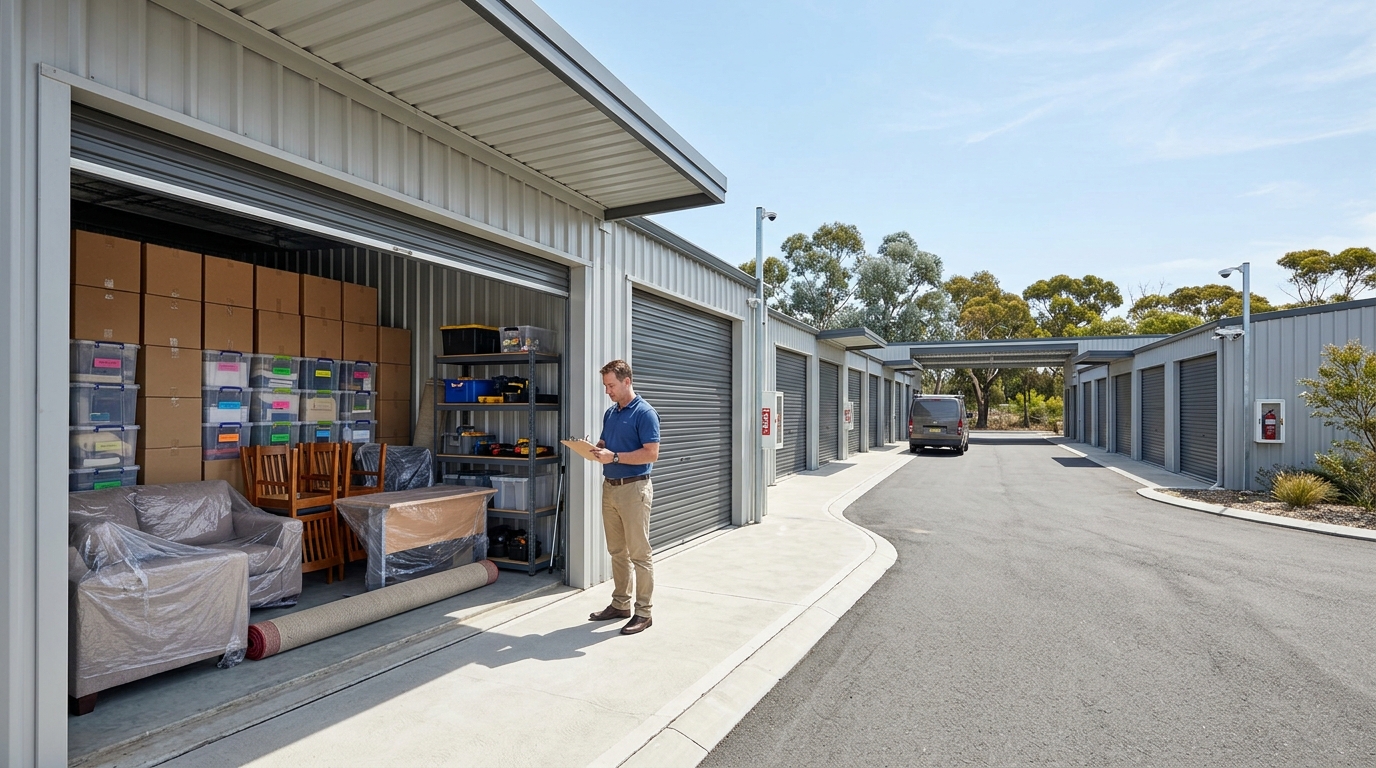
Storage units can be enormously helpful when you are moving, renovating, changing business premises or heading away for FIFO work. However, they are places for storing goods—not sleeping, living or setting up temporary accommodation.
In practical terms, you should not sleep in a self-storage unit in Perth, even for one night. Western Australian building law requires buildings to be used consistently with their approved use and classification, while industry-standard storage agreements expressly prohibit sleeping and residing in a storage space.
This information is general guidance, not legal advice. The precise approval and conditions applying to a building are recorded in its permits and storage agreement.
Is it legal to sleep in a storage unit in Perth?
No. An ordinary self-storage unit is not approved as residential accommodation.
Under section 43 of the Building Act 2011 (WA), an owner or occupier must not use a building differently from the use authorised by its occupancy permit or inconsistently with its approved building classification. The section lists a $50,000 penalty for a first offence and higher penalties for repeat offences.
The National Construction Code separates residential accommodation from storage buildings. Houses are generally Class 1, apartments Class 2 and certain shared or transient accommodation Class 3. Warehouses and storage buildings are normally Class 7b. A residence within a non-residential building requires its own appropriate classification, such as an approved Class 4 caretaker’s residence—it is not created simply by placing a bed in a storage area.
For Midvale properties, the City of Swan explains that an occupancy permit is required for Class 2–9 buildings and that a change to an existing building’s use or classification is an occupancy-permit matter.
Why storage units are not suitable for sleeping
They are designed and assessed for goods
A storage unit’s building and fire-safety requirements are based on its approved storage use. They should not be assumed to provide the ventilation, sanitation, lighting, emergency arrangements or other residential amenities expected of approved accommodation.
DFES advises on fire-safety compliance for commercial and industrial Class 2–9 buildings according to their NCC classification and approved design. That means safety measures are assessed for the building’s intended use—not for unapproved overnight residents behind individual unit doors.
Sleeping usually breaches the storage agreement
The SSAA’s 2025 standard licence terms define the permitted use as storage of goods or another use expressly approved in writing. They specifically state that customers must not “conduct business, reside, sleep, loiter [or] party” in the space or facility contrary to the permitted use.
A breach may lead to restricted access, termination of the agreement or other default action under the applicable contract. Always read the particular agreement and facility rules you receive before moving in.
Insurance should not be treated as residential cover
Do not assume that a storage facility’s insurance covers your belongings—or personal loss or injury arising from unauthorised use. The SSAA standard agreement places responsibility on the customer to assess the value of stored goods and arrange suitable cover, subject to the customer’s actual agreement and policy terms.
For businesses storing valuable inventory, tools or archives, speak with your insurer about off-site storage, maximum item values, stock records and any security conditions.
Common misconceptions
“I’m only staying for one night”
A short stay does not turn a storage unit into approved accommodation. Industry-standard terms prohibit sleeping without creating an exception for a single night, while WA building requirements focus on the authorised use of the building.
“I pay monthly, so it is like renting a room”
A storage licence is not a residential tenancy. Under the SSAA standard agreement, the customer receives a contractual licence to access and use the space for its permitted purpose; it does not create a leasehold interest.
“The site has strong security, so staying there must be safe”
Security protects the facility and stored property. It does not authorise accommodation. Midvale Storage provides perimeter fencing, CCTV and electronic access control, but customers enter during access hours to manage their goods—not to remain overnight.
“Business storage means I can run my business inside”
Business storage is ideal for stock overflow, documents, archives, tools and trade equipment. It does not mean the unit is an office, workshop, shopfront or staff room. The industry-standard agreement expressly distinguishes storing business goods from conducting business inside the space.
Lawful options during common Perth transitions
Moving house or renovating
Book approved short-stay accommodation, a hotel, serviced apartment or another lawful place to sleep. Use a small unit for cartons and personal effects, a medium unit for furniture from a flat or smaller home, or a larger unit when most of a household must be cleared.
This arrangement works well when settlement dates do not align or trades need empty rooms during a renovation.
FIFO or extended travel
Keep furniture, seasonal items and personal effects in storage while using approved accommodation before departure and after returning. Label boxes by room and keep travel documents, medicines and daily essentials with you.
Changing business premises
A Perth retailer can store packaged inventory while a new lease or fit-out is finalised. Tradespeople can store suitable tools and equipment, while professional firms may use organised archive storage. Work, customer meetings, packing operations and staff activities should remain at approved business premises.
Facing an urgent housing problem
A storage unit is not a safe fallback. WA Consumer Protection lists Entrypoint Perth on 1800 124 684, Crisis Care on 1800 199 008 and Find My Way, a free online service showing available homelessness and accommodation support services.
How to use self-storage effectively instead
Separate accommodation from storage. Arrange somewhere lawful to stay before moving your belongings.
Choose the right unit size. Avoid paying for unused space, but allow safe access to important cartons or stock.
Create an aisle. Do not pack the unit so tightly that items at the back become unreachable.
Keep an inventory. This is particularly important for business stock, tools and archive boxes.
Check your cover. Confirm insurance requirements and avoid storing prohibited, hazardous, perishable or irreplaceable goods.
Ask before assuming. If you are unsure whether a business activity or item is permitted, contact the facility first.
Need storage during a move or business transition?
Midvale Storage offers small-to-large options for household goods, business inventory, archives and suitable trade equipment. The facility is in Midvale, conveniently located for customers around Midland, Bellevue, Helena Valley, Greenmount, Hazelmere, Swan View, Stratton, Forrestfield, Woodbridge, the Swan Region and Perth Hills.midvalestorage+1
For help choosing a suitable unit, contact Midvale Storage through the website or call 08 6275 7455.
Frequently asked questions
Keep reading
- Security Features to look for in a Storage Facility
Compare storage security features that help protect business stock, trade tools and archives, including Midvale Storage’s verified safeguards.
- Best Items to Store and What You Shouldn't Put in Storage: A Perth Guide
A friendly local guide from Midvale Storage on the best items to keep in self storage in Perth — and the things you should leave out.
- Common Self Storage Mistakes and How to Avoid Them
Avoid costly self storage mistakes with practical advice on packing, unit size, moisture, access and security from Midvale Storage.
- Self Storage in Midvale: What Questions Should You Ask Before Renting?
Before renting self storage in Midvale, use this local checklist to compare size, pricing, access, security, insurance and rental terms.
- What Size Storage Unit Do I Need?
Unsure what size storage unit you need? Use this practical Midvale Storage guide for household, moving and business storage in Perth’s eastern suburbs.
- How to Choose the Right Self Storage Facility for Your Needs
Discover what to look for when choosing a self storage facility in Perth. Compare security, access, pricing and storage unit sizes before you book.