
Self Storage in Midvale: What Questions Should You Ask Before Renting?
Before renting self storage in Midvale, use this local checklist to compare size, pricing, access, security, insurance and rental terms.
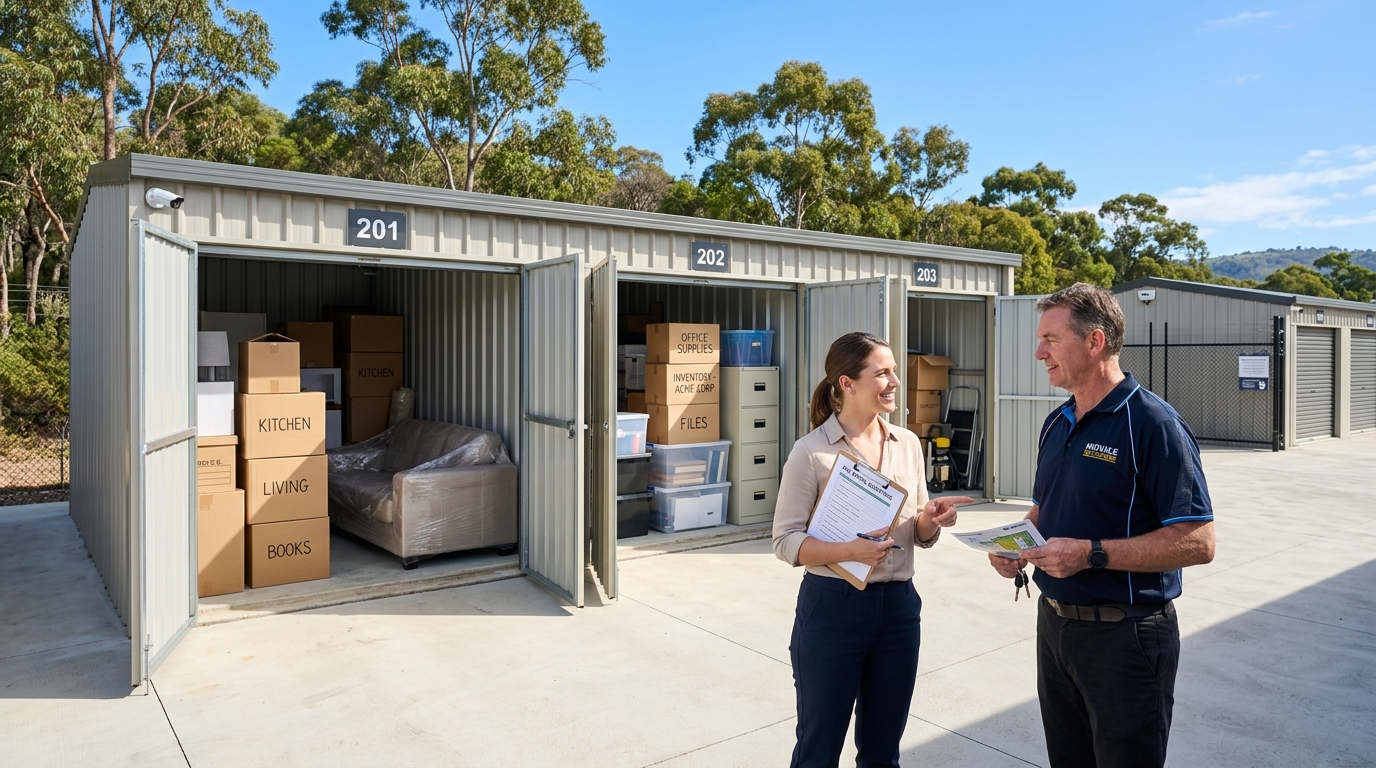
Renting a storage unit should make life simpler, not create fresh surprises. Whether you are moving house in Midland, clearing a room in Swan View, storing tools for a trade business or making space for online retail stock, the best decision starts with a few practical questions.
A useful comparison goes beyond the monthly price. Storage-industry guidance recommends looking at facility condition, security, staff professionalism, reviews, convenience and unit safety before making a decision. Here is what household and business customers should ask when comparing self storage in Midvale and Perth’s Eastern Suburbs.
1. What unit size do I actually need?
Start with an inventory. Count your boxes, measure furniture or equipment and note anything unusually long, tall or difficult to stack.
A small unit may suit cartons, seasonal belongings, sports gear or a modest business archive. A medium unit may work for furniture from part of a home, renovation overflow, trade tools or online retail stock. A large unit may be more appropriate for a household move, bulky equipment or growing business inventory.
These are only guides. Ask for the unit’s measurements and consider how you will arrange everything inside.
If you need to retrieve stock or documents regularly, leave a walkway and keep frequently used items near the entrance. If your household goods will remain untouched until moving day, tighter packing may be practical. It is also worth asking whether you can move to a different-sized unit later, subject to availability.
2. What will the total cost be?
Ask for the complete cost—not only the advertised monthly rent. Clarify:
- the rental cycle and payment due date;
- administration, deposit or set-up charges;
- lock or access-device costs;
- insurance or goods-protection costs;
- introductory offers and the ongoing price;
- late-payment charges; and
- notice requirements when moving out.
Read the storage agreement before paying. Confirm what happens if your plans change, whether unused rent may be refundable and how future price changes would be communicated.
Midvale Storage’s online booking page displays available units, approximate dimensions, suggested uses and corresponding prices, making it easier to compare current options before reserving.
3. When and how can I access the unit?
“Convenient access” means different things to different customers. Someone storing furniture during a three-month renovation may rarely visit, while a tradesperson or online retailer could need regular access.
Ask about standard access hours, weekends, public holidays and whether approval is required for extended access. Find out how authorised employees or family members can be added or removed and what happens if a key, code or access device is lost.
For Eastern Suburbs Perth and Perth Hills customers, picture the real journey. Will you be travelling from Helena Valley or Greenmount with a trailer? Do you need to collect stock before making deliveries around the Swan Region? A Midvale facility may also be convenient for customers from Bellevue, Hazelmere, Stratton, Forrestfield and Woodbridge, but compare the journey at the times you are most likely to visit.
4. How easy is loading and unloading?
A suitable unit can still be inconvenient if your vehicle or belongings cannot reach it easily. Ask:
- Is the unit on the ground floor or an upper level?
- How far is the loading point from the unit?
- Are trolleys or lifting aids available?
- Is there suitable clearance for a van, trailer or removalist truck?
- Are corridors and doorways wide enough for sofas or long tools?
- Is the loading area sheltered from the weather?
If possible, inspect the unit—or an equivalent unit—before moving in. Australian storage guidance recommends checking whether you can inspect the space, as well as asking about loading access and the move-in process. Bring measurements for your largest item and vehicle.
5. What security and site-management measures apply?
Ask the operator to explain security in plain language rather than relying on a single word such as “secure”.
Useful questions include:
- How is entry controlled?
- Which areas are monitored?
- How are incidents handled?
- Who can access my unit?
- What type of lock do I need?
- What happens if access equipment stops working?
Look at everyday standards too. Is the facility clean and well maintained? Are doors, fencing and common areas in good condition? Can the operator clearly explain the procedures that apply to customers and visitors?
6. Are my goods insured while in storage?
Do not assume that belongings are automatically insured. Ask whether you must arrange your own insurance or whether an optional protection product is available. Australian storage guidance notes that home or business insurance may not cover goods placed in storage, while individual storage providers can have different insurance requirements.
If you already have contents or business insurance, ask your insurer—in writing—whether stored goods are covered. Check:
- the insured value;
- the excess;
- policy exclusions;
- the claims process;
- whether commercial stock or tools are covered; and
- whether cover applies while goods are being transported.
Keep an inventory with photographs, serial numbers or purchase documents for valuable household or business items.
7. What can and cannot be stored?
Request the prohibited-items list before moving in. Storage agreements commonly restrict illegal, dangerous, flammable, explosive, living or perishable goods.
Batteries deserve particular attention. The Self Storage Association of Australasia advises that dangerous goods, including batteries, are prohibited under its self-storage agreement guidance and encourages operators to make these exclusions clear to customers.
Tell the operator what you intend to store if you are unsure—especially powered tools, e-bikes, mobility devices, chemicals or equipment containing batteries. Checking first can prevent a breach of the agreement and reduce safety risks.
8. Is the unit suitable for Perth conditions and my items?
Perth’s seasons matter when preparing belongings for storage. Bureau of Meteorology averages for Perth Metro show mean maximum temperatures above 31°C in January and February, with substantially higher rainfall from May through August.
Ask how the unit is protected from weather and whether sensitive possessions require a different storage option. Store only clean, completely dry items. Use sturdy labelled boxes, protect furniture with appropriate covers, leave cleaned appliance doors slightly ajar and maintain an inventory.
Ask for specific advice before storing photographs, electronics, wooden furniture, important documents or other temperature- or moisture-sensitive belongings.
9. What should business customers ask?
Businesses should consider workflow, privacy and future growth. Ask whether the unit layout allows practical stock rotation, shelving and retrieval. Decide which staff may access the unit and maintain an internal key, code or sign-out process.
For archive storage, use numbered boxes and maintain a searchable contents register. The Australian Taxation Office advises businesses to keep records securely and protect them from theft, fire or water damage. It also recommends keeping back-ups of electronic records away from the main business premises or in cloud storage.
Check the retention, confidentiality and privacy requirements applying to your industry. A storage unit can support your records-management process, but it should not replace an appropriate compliance system.
A quick decision rule
Choose the unit that fits your belongings, access pattern and total budget—not simply the cheapest available space.
Before signing, make sure you can answer six questions:
- What will fit?
- What will the total cost be?
- When can I access it?
- How are my goods protected?
- What am I allowed to store?
- How do I end the rental?
Ready to compare options? Visit the Midvale Storage booking page to view currently available units and pricing, then choose the option that best suits your household or business needs.
Frequently asked questions
Keep reading
- Security Features to look for in a Storage Facility
Compare storage security features that help protect business stock, trade tools and archives, including Midvale Storage’s verified safeguards.
- Best Items to Store and What You Shouldn't Put in Storage: A Perth Guide
A friendly local guide from Midvale Storage on the best items to keep in self storage in Perth — and the things you should leave out.
- Can You Sleep in a Storage Unit? What’s Legal in Perth?
Sleeping in a Perth storage unit is not permitted. Learn the WA rules, safety risks and smarter options for moves or business transitions.
- Common Self Storage Mistakes and How to Avoid Them
Avoid costly self storage mistakes with practical advice on packing, unit size, moisture, access and security from Midvale Storage.
- What Size Storage Unit Do I Need?
Unsure what size storage unit you need? Use this practical Midvale Storage guide for household, moving and business storage in Perth’s eastern suburbs.
- How to Choose the Right Self Storage Facility for Your Needs
Discover what to look for when choosing a self storage facility in Perth. Compare security, access, pricing and storage unit sizes before you book.