
Common Self Storage Mistakes and How to Avoid Them
Avoid costly self storage mistakes with practical advice on packing, unit size, moisture, access and security from Midvale Storage.
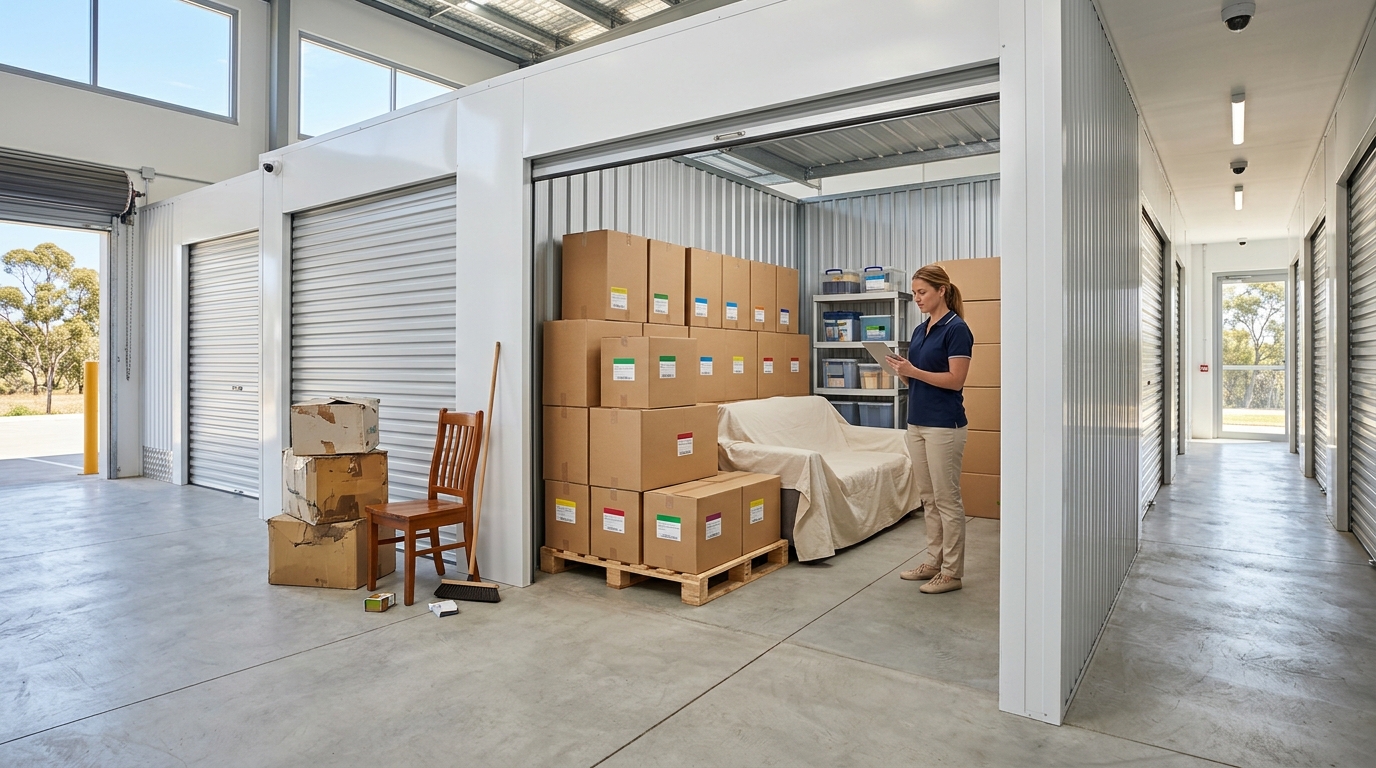
Self storage should make life easier—not leave you with damaged furniture, collapsing cartons or a missing item buried at the back of the unit.
Whether you are moving house in Midland, clearing space in Helena Valley, storing tools for a trade business or managing online retail stock, most storage problems can be prevented with some simple planning. Established industry advice consistently recommends measuring your space, cleaning belongings, using suitable packing materials and arranging the unit according to how often items will be needed.
Here are ten common self storage mistakes and practical ways to avoid them.
1. Guessing which storage unit size you need
Choosing a unit without first checking what you intend to store can create two problems. Too little room encourages unstable stacking, while significantly more room than necessary leaves unused space.
Prepare an inventory and group everything into categories such as cartons, furniture, appliances, tools, archives and stock. Measure bulky pieces, including sofas, shelving, mattresses and workbenches.
A small storage unit may suit seasonal decorations, sporting equipment, personal items or archive cartons. A medium unit can work well for furniture during a renovation or stock for a growing retailer. A larger unit may be appropriate for household contents, business equipment or goods that require an internal walkway.
Midvale Storage offers flexible sizes, and its team can help customers select a unit based on what they are storing rather than guesswork.
2. Packing items before they are clean and dry
Damp camping equipment, recently cleaned furniture and unwashed appliances should not go straight into storage. Residual moisture and food residue can contribute to odours, staining, mould or pest activity.
Wash and completely dry clothing and linen. Vacuum upholstered furniture, wipe down tools and remove dirt from outdoor equipment. Fridges and freezers should be defrosted, cleaned and dried, with their doors kept slightly ajar during storage.
Moisture protection remains relevant in Perth. Historical Bureau of Meteorology records show that Perth’s winter mornings have been considerably more humid and wetter than summer mornings, reinforcing the value of storing belongings completely dry.
3. Using weak or unsuitable boxes
Old supermarket cartons and damaged boxes may collapse when stacked. Bulging cartons are also difficult to move safely.
Use sturdy, similar-sized boxes where practical. Put books, tools and other heavy objects in smaller cartons and reserve larger cartons for lightweight items such as cushions and linen. Fill gaps with packing paper so contents cannot move, then seal both the top and bottom.
Wrap breakables individually with packing paper, bubble wrap or foam. Use clean moving blankets or breathable covers on furniture rather than sealing damp materials beneath plastic.
4. Labelling cartons too vaguely
A box marked only “kitchen” is not very helpful when you are searching for one appliance among twenty cartons.
Number every box and label at least two visible sides with:
The room or business area
A short contents list
“Fragile” or “heavy” where applicable
A stock code, document year or product category for business goods
Keep a matching inventory on your phone or computer. Photograph valuable furniture, electronics, equipment and serial numbers before storage, and keep those records outside the unit.
5. Loading without planning future access
One of the most frustrating mistakes is placing something important at the back and filling every space in front of it.
Put items you are unlikely to need at the rear. Keep frequently used goods near the entrance and, where the unit allows, leave a central walkway. Face labels towards the aisle and divide the unit into zones—for example, furniture, seasonal goods, archives, tools and sale stock.
This is particularly useful for tradespeople collecting equipment, online retailers rotating inventory and families retrieving winter clothing or camping gear.
6. Stacking heavy items on fragile ones
A tall stack does not necessarily use space efficiently if it is unstable or crushing the boxes beneath it.
Build stacks with strong, heavy cartons at the bottom and lighter or fragile cartons above. Keep each stack square and avoid stacking beyond a height you can handle safely. Never use a sofa, mattress or appliance as a load-bearing shelf.
Disassemble tables, bed frames and removable shelving where practical. Place screws and fittings in labelled bags and attach them securely to the matching furniture.
7. Ignoring airflow and floor protection
Packing items tightly against every wall can make inspection difficult and restrict airflow.
Leave small gaps around furniture and stacks where possible. Shelving or a suitable raised barrier can keep vulnerable cartons, fabrics and documents away from direct contact with a concrete floor. Sealed plastic tubs may help protect moisture-sensitive contents, but everything placed inside must first be completely dry.
For photographs, artwork, electronics, important archives or other sensitive goods, ask whether the available storage environment and your proposed packaging are suitable.
8. Relying entirely on facility security
A secure facility and responsible customer habits work together.
Midvale Storage provides perimeter fencing, 24/7 CCTV and electronic access control at its purpose-built Midvale facility. Customers should still use a strong lock suitable for their unit, keep keys and PINs private and lock the unit whenever they are not actively loading.
Avoid identifying the storage facility or unit number on your key tag. Notify the storage team promptly if a key or access credential is lost.
9. Assuming your belongings are automatically insured
Security measures do not necessarily mean the contents of a storage unit are insured. The Self Storage Association of Australasia recommends insuring stored goods, while individual policies and storage agreements can have different conditions.
Before moving in, ask your home, business or specialist insurer whether off-site storage is covered. Confirm the insured value, exclusions, excess, storage-period limits and any requirements for particular goods. Read the relevant Product Disclosure Statement rather than assuming every event or item is covered.
10. Bringing prohibited or unsuitable items
Not everything that fits inside a unit is permitted.
Industry consumer guidance says hazardous, illegal, stolen, flammable, explosive, environmentally harmful, perishable or living items should not be placed in self storage. Read your storage agreement and ask before bringing fuel, gas cylinders, chemicals, paint, food, batteries or other questionable goods.
Business customers should also confirm whether stock has special safety, temperature or insurance requirements.
Check your unit before locking up
Before leaving, ask:
Are all items clean and completely dry?
Are boxes labelled on more than one side?
Are heavy items low and stacks stable?
Can I reach the things I will need first?
Is the unit securely locked?
Have I checked insurance and prohibited-item requirements?
A well-organised storage unit saves time, uses space intelligently and makes retrieving belongings much simpler. If you need household, furniture, archive, trade or business storage in Midvale, Midland, Bellevue, Hazelmere, Swan View, Stratton, Forrestfield, Woodbridge, the Swan Region or Perth Hills, contact Midvale Storage with a list of what you plan to store. Our team can help you choose a practical unit size for your needs.
Frequently asked questions
Keep reading
- Security Features to look for in a Storage Facility
Compare storage security features that help protect business stock, trade tools and archives, including Midvale Storage’s verified safeguards.
- Best Items to Store and What You Shouldn't Put in Storage: A Perth Guide
A friendly local guide from Midvale Storage on the best items to keep in self storage in Perth — and the things you should leave out.
- Can You Sleep in a Storage Unit? What’s Legal in Perth?
Sleeping in a Perth storage unit is not permitted. Learn the WA rules, safety risks and smarter options for moves or business transitions.
- Self Storage in Midvale: What Questions Should You Ask Before Renting?
Before renting self storage in Midvale, use this local checklist to compare size, pricing, access, security, insurance and rental terms.
- What Size Storage Unit Do I Need?
Unsure what size storage unit you need? Use this practical Midvale Storage guide for household, moving and business storage in Perth’s eastern suburbs.
- How to Choose the Right Self Storage Facility for Your Needs
Discover what to look for when choosing a self storage facility in Perth. Compare security, access, pricing and storage unit sizes before you book.