
What Size Storage Unit Do I Need?
Unsure what size storage unit you need? Use this practical Midvale Storage guide for household, moving and business storage in Perth’s eastern suburbs.
Choosing a storage unit can feel confusing, especially if you’re trying to picture furniture, boxes, appliances or business stock inside an empty space. The good news is that you don’t need to guess.
The best way to work out what size storage unit you need is to start with what you’re storing, how often you’ll need access, and whether your storage needs might grow. A unit that is too small can be frustrating to pack and difficult to access. A unit that is too large may mean paying for space you do not need.
At Midvale Storage, we help households, renters, tradies and small businesses across Midvale, Midland, Perth’s eastern suburbs and the Swan Region choose practical storage for real-life situations — moving house, renovating, decluttering, storing tools, keeping stock organised, or freeing up space at home or work.
A Simple 4-Step Formula for Choosing Storage Size
1. List your largest items
Start with the bulky items first. These usually decide the minimum space you’ll need.
Write down items such as:
Beds and mattresses
Lounges and armchairs
Dining tables and chairs
Fridges, washing machines and dryers
Shelving, desks and cabinets
Toolboxes, stock shelving or business equipment
Once the large items are listed, it becomes much easier to estimate whether you need a medium, large, extra-large or warehouse-style space.
2. Estimate your boxes
Boxes often take up more room than people expect. A few boxes are easy to fit around furniture, but twenty, thirty or fifty boxes can quickly change the size you need.
Use sturdy boxes where possible and keep similar sizes together. This makes stacking safer and helps you use the vertical space more efficiently. Label each box clearly so you can find things later without unpacking everything.
3. Decide whether you need regular access
If you’re storing everything during a short move, you may be able to pack the space tightly. But if you’ll need to access tools, documents, stock, seasonal items or family belongings, allow room for a walkway.
This is especially important for business storage. A small business storing online retail stock, archived files or trade equipment will usually need more organisation than someone storing furniture for a few weeks.
4. Allow for future storage
Storage needs often grow. You might add extra boxes during a renovation, bring in more business stock, or decide to store items from the garage later.
If you are between two sizes and expect to add more items, it may be worth choosing a slightly larger space. The right size should feel practical, not packed to the door from day one.
The simple sizing process is shown below:
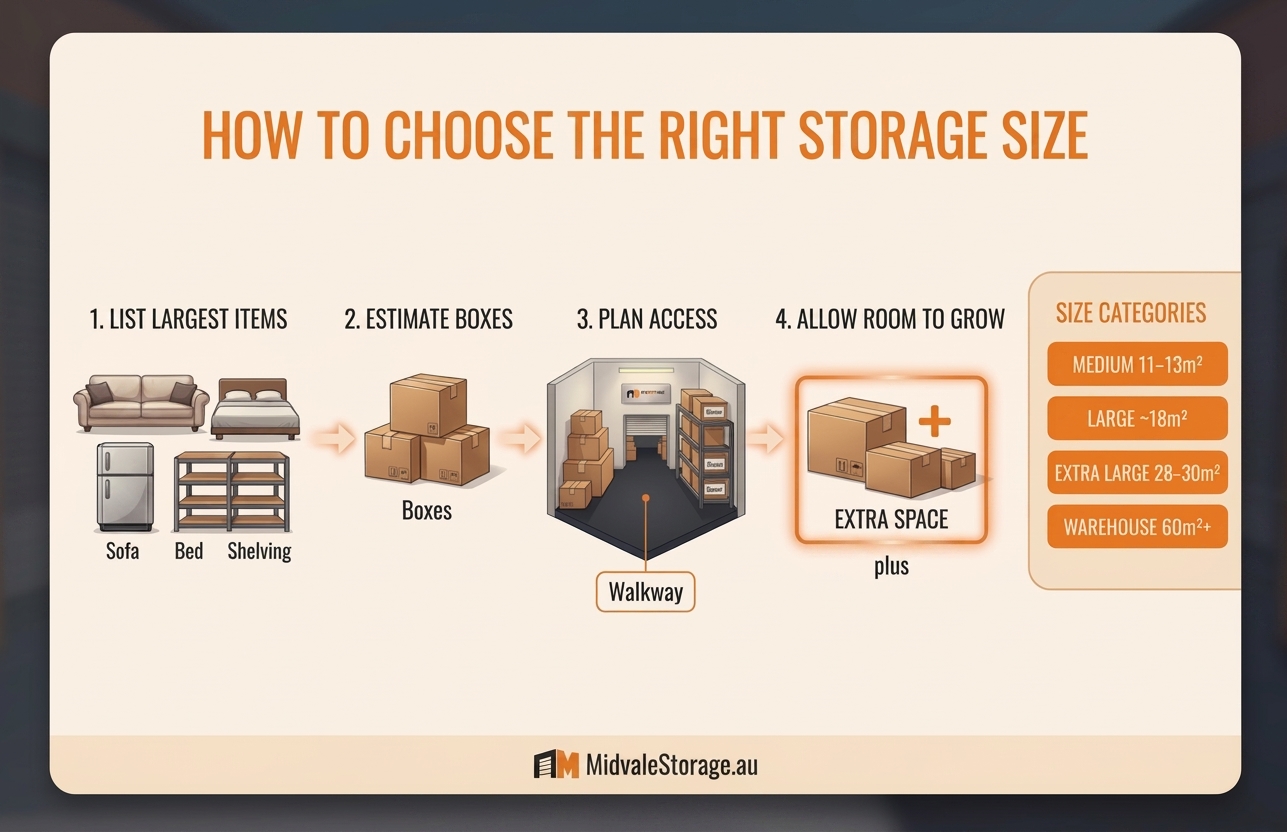
Figure 1: A simple decision guide for working out storage size: list large items, estimate boxes, decide access needs and allow room for future storage.
Storage Size Categories and Typical Uses
Here is a practical guide to common storage size categories available at Midvale Storage, without getting into individual unit details.
Storage Category | Approximate Size | Real-World Comparison | Typical Uses |
|---|---|---|---|
Medium Storage | 11–13m² | A standard master bedroom. Fits the contents of a 1-to-2 bedroom apartment or a large transit van. | Apartment contents, boxes, small furniture, appliances, archives, tools and small business stock |
Large Storage | Around 18m² | A standard single-car garage. Fits the contents of a 3-bedroom house or a medium moving truck. | Household furniture, renovation storage, larger appliances, office furniture and stock overflow |
Extra Large Storage | 28–30m² | A standard double-car garage. Fits the contents of a 4-to-5 bedroom home or a large removalist truck. | Larger house moves, bulky furniture, business inventory, commercial equipment and organised stock storage |
Container Storage | 14–30m² | A standard 20-foot or 40-foot shipping container. | Equipment, tools, cartons, selected bulky items, business storage and overflow stock |
Warehouse Storage | 60m²+ | Two to three double garages. Roughly the size of half a tennis court. | Larger commercial storage, trade equipment, property styling stock, bulk inventory and business overflow |
Which Size Might Suit Your Situation?
Moving from an apartment or smaller home
Medium storage is often a good starting point for apartment contents, boxes, smaller furniture, appliances and personal belongings. It may suit renters, students, couples, downsizers or people temporarily storing items while they move.
Renovating or decluttering
If you’re renovating in Perth’s eastern suburbs, a large storage space can help keep furniture, appliances and boxes out of the way while work is underway. It gives you more room than a smaller space and can make it easier to separate fragile items from heavy furniture.
Moving a larger household
For larger house moves, extra-large storage may be more practical. This can suit lounges, bedroom furniture, dining settings, outdoor items, appliances, boxes and garage contents. It also gives you more flexibility if you need access during the move.
Storing business stock or equipment
Businesses often need storage that is easy to organise. If you store stock, tools, documents, archives or equipment, think about shelving, walkways and how often you’ll visit. A slightly larger space may save time if you need to pick, rotate or retrieve items regularly.
Larger commercial storage needs
Warehouse storage is better suited to customers who need significant space for commercial goods, trade equipment, bulky stock or business overflow. It is generally more than most household customers need, but useful for businesses that need room to organise items properly.
Common Mistakes When Choosing Storage Size
Choosing only by price
It’s natural to compare prices, but the cheapest space is not always the best fit. If it is too small, you may struggle to pack safely or access your belongings.
Forgetting access space
A unit packed from wall to wall may technically fit your items, but it can be frustrating if you need something from the back. Leave a walkway if you plan to visit regularly.
Not measuring bulky items
Large dining tables, shelving, mattresses, fridges and commercial equipment can be awkward. Measure anything oversized before booking.
Underestimating boxes
People often remember the big furniture but forget how many small items they own. Boxes, tubs, bags and loose items can add up quickly.
Mixing fragile and heavy items
Heavy boxes should sit lower, with fragile items protected and clearly labelled. Cover furniture and avoid placing heavy items on soft furnishings.
Local Storage Considerations for Perth’s Eastern Suburbs
If you live or work around Midvale, Midland, Bellevue, Greenmount, Helena Valley, Swan View, Hazelmere, Forrestfield or the wider Swan Region, local convenience matters.
A nearby facility can make moving day easier, especially if you need multiple trips with a ute, trailer or van. It also helps if you’re a small business owner who needs regular access to stock, tools or archives.
Choosing the right size is not just about square metres. It’s about convenience, access, security, packing style and peace of mind.
Final Advice
If you’re still unsure, start with a simple list of your largest items, estimate your boxes, and decide whether you’ll need regular access. From there, match your situation to the closest storage category.
For many people, medium or large storage is a practical starting point. For larger homes, business stock or bulky furniture, extra-large or container storage may be more suitable. For bigger commercial needs, warehouse storage may be the better fit.
Next Step
Not sure what size storage space is right for you? Contact Midvale Storage for friendly local advice, current availability or a quote. We’ll help you choose a practical option for your household or business storage needs in Midvale, Midland and Perth’s eastern suburbs.
Frequently asked questions
Keep reading
- Security Features to look for in a Storage Facility
Compare storage security features that help protect business stock, trade tools and archives, including Midvale Storage’s verified safeguards.
- Best Items to Store and What You Shouldn't Put in Storage: A Perth Guide
A friendly local guide from Midvale Storage on the best items to keep in self storage in Perth — and the things you should leave out.
- Can You Sleep in a Storage Unit? What’s Legal in Perth?
Sleeping in a Perth storage unit is not permitted. Learn the WA rules, safety risks and smarter options for moves or business transitions.
- Common Self Storage Mistakes and How to Avoid Them
Avoid costly self storage mistakes with practical advice on packing, unit size, moisture, access and security from Midvale Storage.
- Self Storage in Midvale: What Questions Should You Ask Before Renting?
Before renting self storage in Midvale, use this local checklist to compare size, pricing, access, security, insurance and rental terms.
- How to Choose the Right Self Storage Facility for Your Needs
Discover what to look for when choosing a self storage facility in Perth. Compare security, access, pricing and storage unit sizes before you book.